The Technology
Information encoded within glass.
Ultrashort laser pulses create structures within fused silica. Their position and optical properties encode information that optical imaging and decoding can recover.
Explore the platform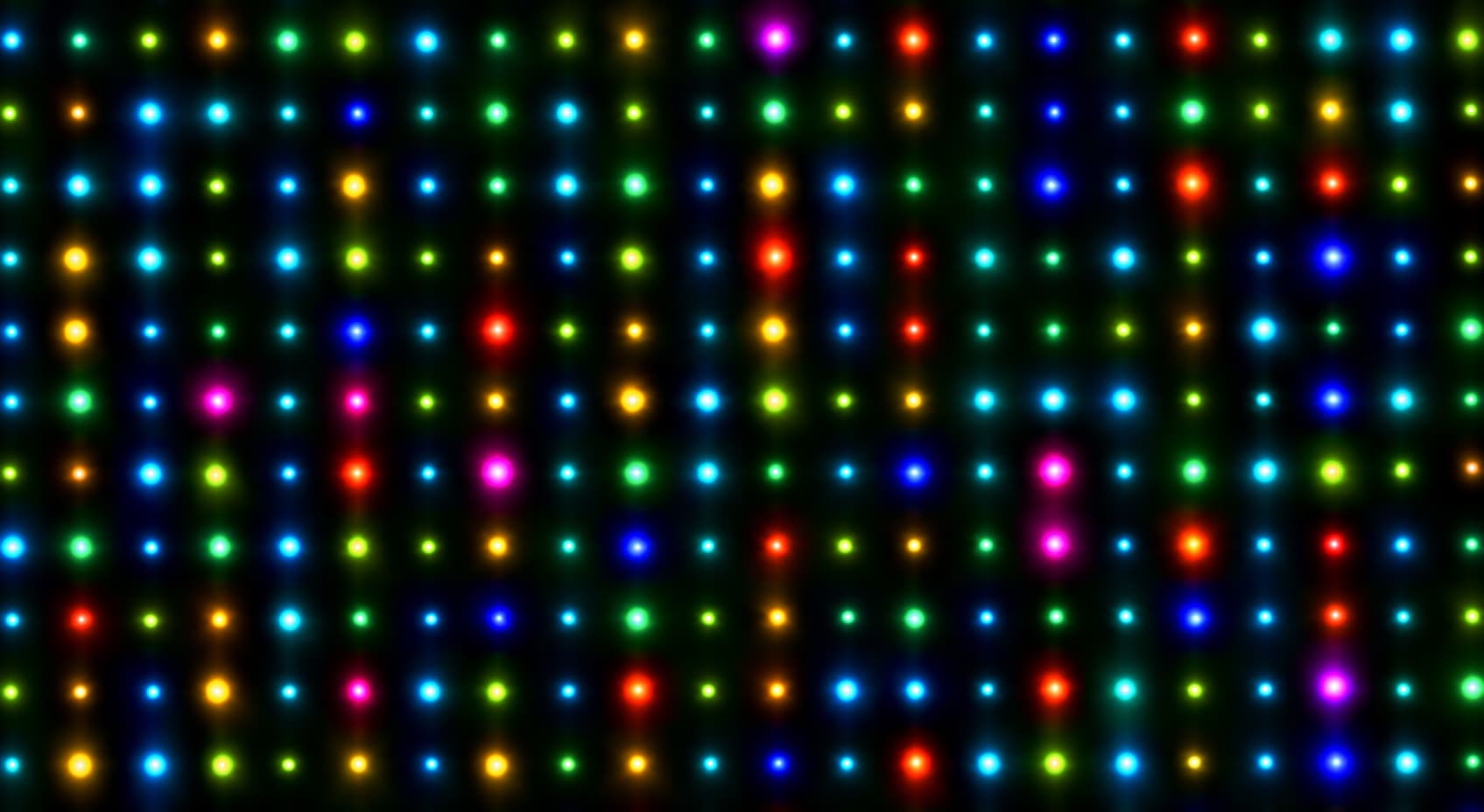
Real recorded data – voxel arrays under polarization microscopy (20 µm scale)
5D
Five Dimensions
A tightly focused femtosecond pulse deposits energy through nonlinear absorption inside fused silica, leaving a self-organized birefringent nanostructure. The slow-axis orientation and retardance of that voxel are set by the polarization and energy of the writing pulse, so each voxel carries several bits on top of its three spatial coordinates. These three spatial coordinates together with the two optical properties give 5D storage.
- X
- Y
- Z
- Optical axis
- Retardance
Engineered for the scale of the AI era.
Engineered for the scale of the AI era.
Data is written throughout the volume of fused silica, using multiple optical states per voxel and hundreds of layers. The architecture provides a path to up to 250 TB per platter at target density by 2031 - we are working on a 10X improvement over density demonstrated in 2026.
Made from engineered sand — one of the world’s most abundant materials. Written once, requiring zero power at rest and designed for highly scalable media production.
Designed for 1,000+ year retention, with no magnetic decay and no routine media migration.
Durability
Built to outlast the data lifecycle.
Storage media has historically been treated as a consumable. Drives are replaced, tape generations are migrated and data is repeatedly copied simply to keep it alive. We changes that model. The data is physically encoded inside fused silica, creating media designed to outlast the useful life of the information it holds — removing routine migration from the storage lifecycle.
- No routine media migration
- No climate control required for media at rest
- LONG-TERM STORAGE TEMPERATURE
- −150°C to +500C*
- Tape: 16°C to 25°C
- HDD: 16°C to 25°C l
- LONG-TERM STORAGE HUMIDITY
- 0–100% RH
- Tape: 20–50% RH
- HDD: <40% RH
- DATA RETENTION / SERVICE LIFE
- 1,000+ years
- Tape: Up to 30 years under controlled conditions
- HDD: 5-year design service life
- MAGNETIC-FIELD TOLERANCE
- Non-magnetic; >10,000 G class
- Tape: ≤50 G stray field
- HDD: ~400 G
- IONISING-RADIATION TOLERANCE
- ≥500 kGy class
- Tape: ~30 kGy
- HDD: ~0.03–0.3 kGy electronics-limited
- MECHANICAL WEAR
- 0 media contact per read
- Tape: 20,000 load/unload cycles
- HDD: 600,000 head load/unload cycles
- MEDIA MIGRATION / REPLACEMENT
- No media-driven refresh cycle
- Tape: Typically ~7–10 years
- HDD: Typically ~3–5 years
Recording
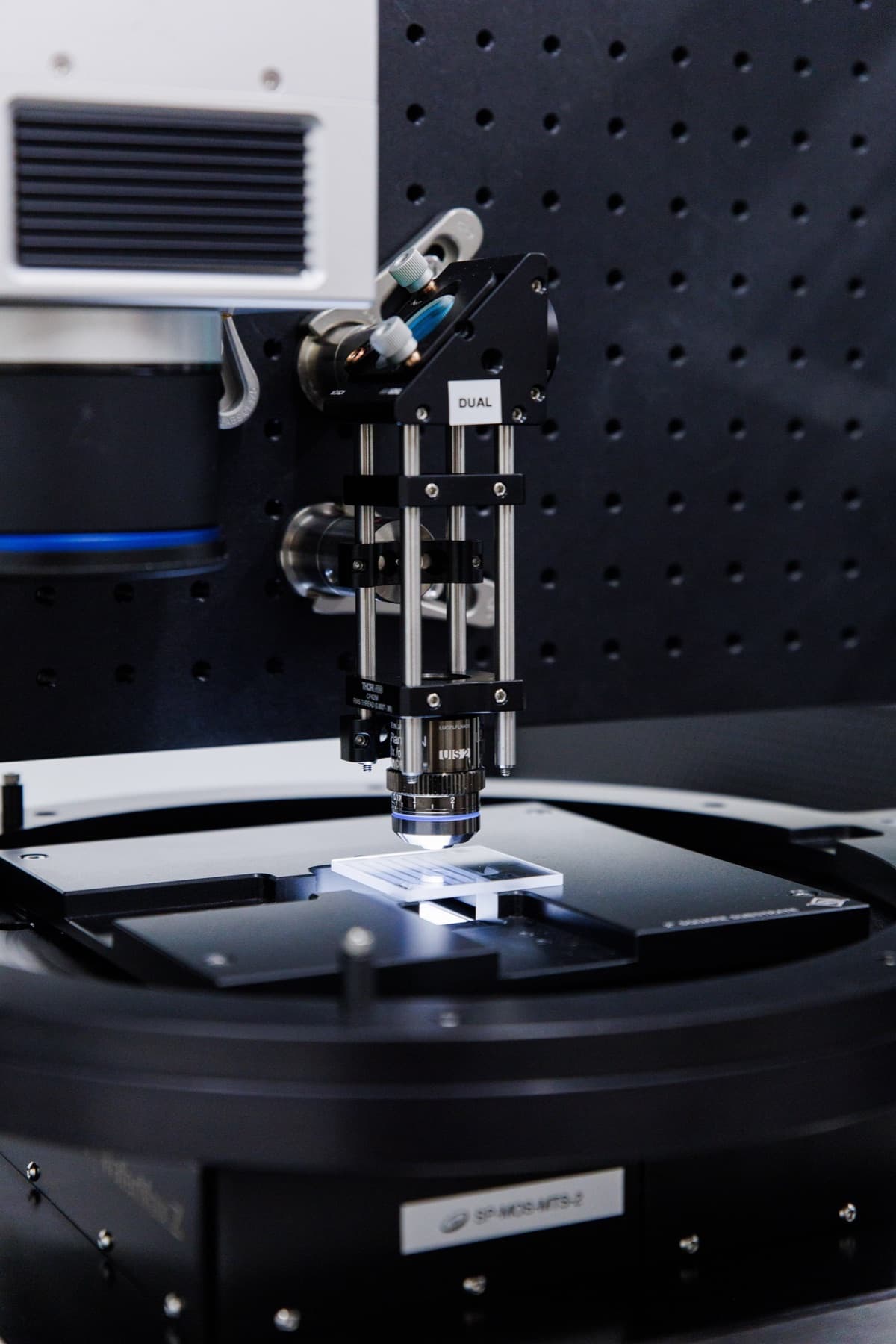
Laser processing creates localised structures inside the glass.
Our engineering focuses on recording throughput, consistency and repeatability.
We write inside glass with femtosecond bursts of light.
A femtosecond is to a second what a second is to 32 million years – each pulse is over before light can cross a human hair.
- 01
Sculpt
The pulse is too brief to heat the glass – it reshapes the silica itself, locking a 500 nm nanostructure permanently inside. Nothing is burned; nothing decays.
- 02
Encode
Each voxel carries up to 8 bits across five dimensions – position (x · y · z) plus the birefringence (axis orientation steps) and retardance of the structure.
- 03
Stack
Hundreds of voxel layers stack through a 2 mm platter. The data lives in a volume, not on a surface – that is the density unlock.
Readout
Polarisation imaging captures the recorded structures. Decoding translates their optical signatures into data.
Readout engineering connects optical performance with reliable data recovery.
We don't play the data back – we photograph it.
No heads, no spooling, no contact: a polarization camera images whole fields of voxels at once, and machine learning turns the picture into bytes.
- 01
Image
High-magnification polarization optics capture millions of nanostructures in a single exposure – reading is massively parallel by design.
- 02
Decode
Proprietary ML models translate each voxel's optical signature back into binary – 20 MB/s in 2026.
- 03
Access
Any voxel, any layer, directly. True random access, under 15 seconds to first byte – the medium never moves and never wears.
Reader hardware designed and assembled in-house.
System Development
Technical characteristics.
Optics, electronics, software and media handling must work together.
We develop these capabilities around the requirements of practical storage and industrial integration.
- Medium
- Fused silica (quartz glass)
- Encoding
- Up to 8 bits per voxel
- Voxel size
- 500 nm nanostructure
- Layers
- Hundreds per 2 mm platter
- Volumetric density
- Up to 10 GB / mm³
- Capacity
- 250 TB / 5″ platter at target density
- Access
- < 15 s to first byte, random
- Read rate
- 20 MB/s per drive 2026 – 500MB/s 2030 target
- Energy at rest
- Zero
Engineering
Proprietary Ultrafast Laser Nano-Structuring
SPhotonix FemtoEtch™ is the result of three decades of research – a patented system that empowers femtosecond laser writing with unparalleled precision, giving software-driven control over the polarization and retardance of every voxel or nanograting in 3D transparent materials.
It creates trillions of nanograting and nanovoxel structures inside glass, unlocking new frontiers in data storage, imaging, microscopy, sensing, telecommunications and laser fusion.
State-of-the-Art Facilities
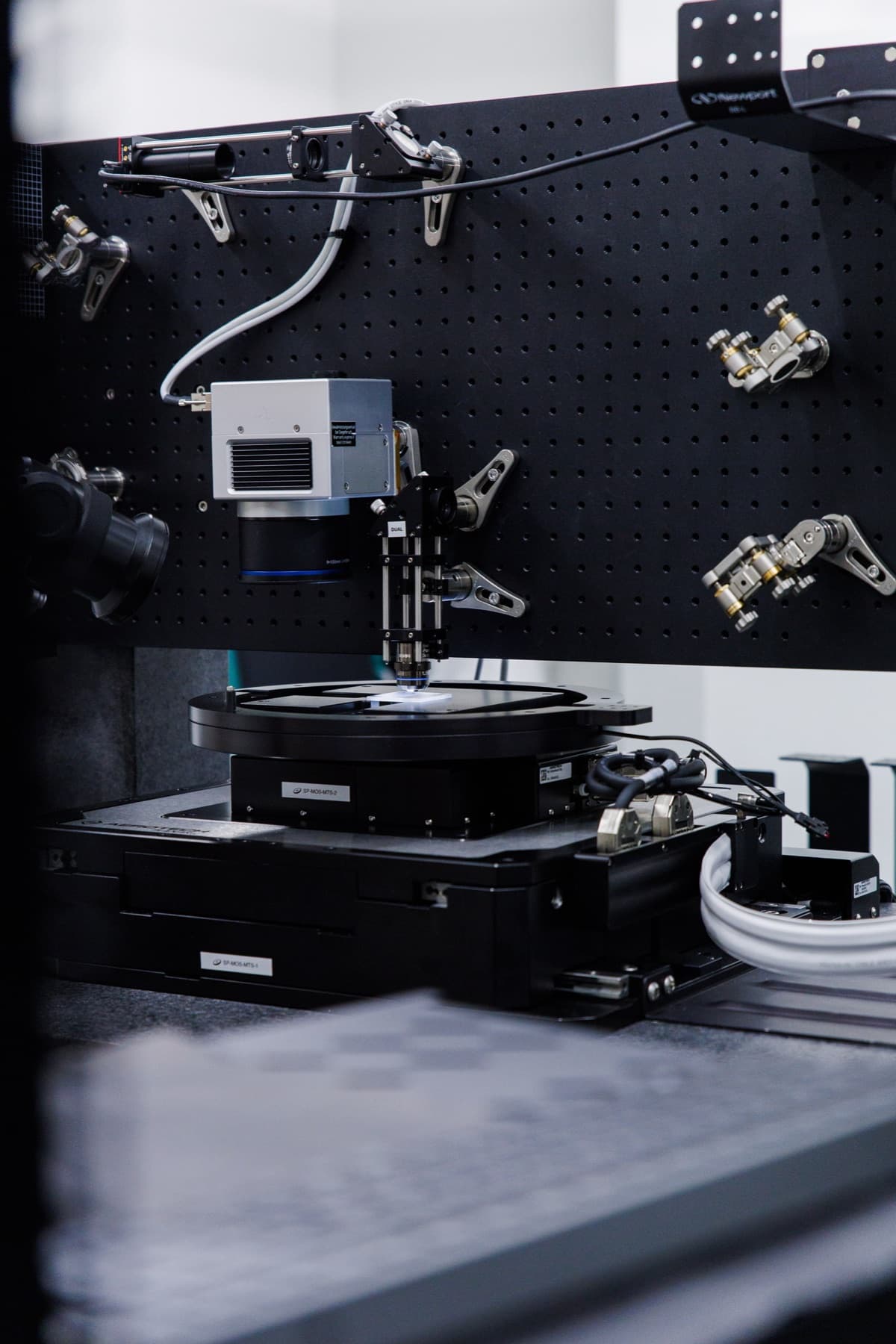
Our pioneering laboratory sits at the forefront of nanotechnology and photonics, housing advanced femtosecond lasers and precision nano-fabrication equipment. It lets us develop ultra-durable data storage and fabricate unique optical components with nanometre precision.
These facilities let our team build the mainstream data-storage technology of tomorrow — and service partner demand today.
Build the next generation of storage with us.
Talk to our team